
Preached at St Matthew’s Carver Street.
Revelation 11:19a; 12:1-6a, 10ab | Psalm 45:10-16 | 1 Corinthians 15:20-27 | Luke 1:39-56
“God’s temple in heaven was opened, and the ark of his covenant was
seen within his temple”
What would it mean for all of God’s promises to come true?
If every war was ended, if the factories made fridges and fast cars, not missiles and body-armour? If every young person could find wholesome and rewarding work, with good food on every table? If the hospitals had to close for lack of the sick? If fear no longer drove the agendas of our governments and our politics became a discussion of how to love better? If the vices which ensnare us lost all their allure and we all finally had freedom?
What if all God’s promises came true? I would quit the Seminary immediately – there would be no more need for Priests. I would put my funeral plan in a scrapbook titled ‘what was’, for there would be no death creeping to take me. And I’d tend and till the little portion of God’s good earth given to me just for the joy of seeing what beauty it would yield.
When Jesus rose from the dead He showed that death does not defeat his Father’s promise, that God wills for His people to live forever and to join Him in a world made new. Our New Testament is the record of the first decades of this emerging new world, caught in snapshots. It is the experience of early Christian communities as God the Holy Spirit inspires their life and unfolds the way in which all the ancient hopes recorded in the Old Testament find their fulfilment in this New Covenant.
The history of the Church, its life of worship and its teaching, of course proceeds from the Bible into all kinds of doctrines and traditions which form our family heritage. It is the stuff of grand disputes between ancient Bishops and the conversations over coffees and Bibles in study-halls and living rooms, as we discern in the grand ways and the small ways, how it is that God is manifesting His promises in our age, how He is showing us the Truth and bringing us to new life.
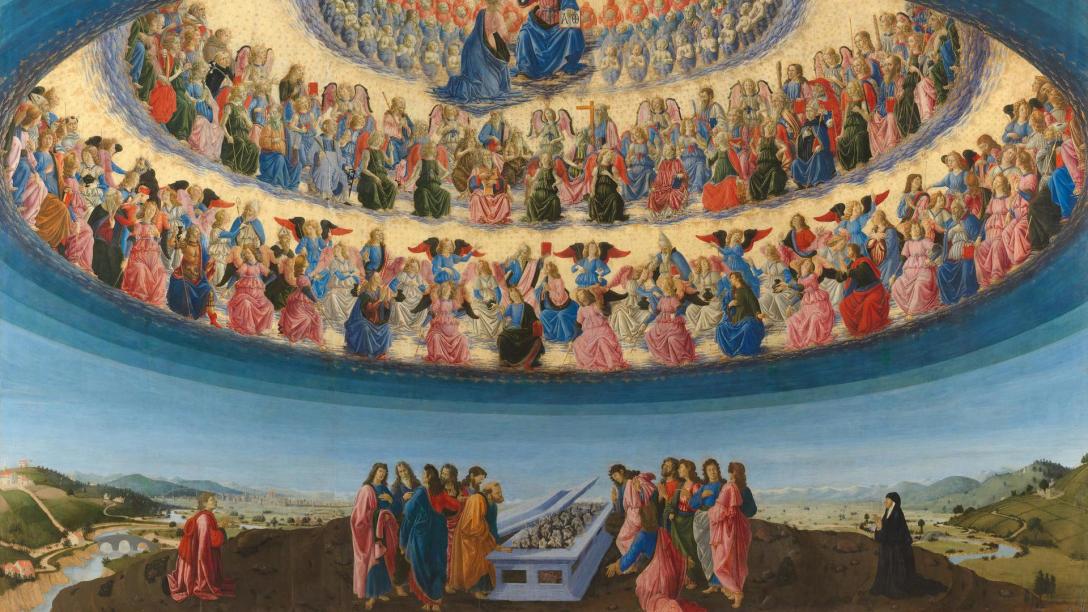
Today’s great Solemnity of the Assumption of Mary is just such an occasion to take stock and remember what God has done in Christ, in particular in the Blessed Virgin Mary, and with ever richer reflection what that means when we locate her in the wholeness of God’s revelation in Scripture.
The Revelation given to John which we heard this morning gives a glimpse into the Truth in a series of visions. These visions clash and overlap, they crystallise in the mind but slip just off the edge of full comprehension, they tell of things that have been, things that are, and that which is to come. They especially bring new meaning to familiar parts of the Old Testament. In our first reading today we hear of an Ark… and a Woman. A vessel containing a promise, and a mother pregnant with her Son.
Moses was told to build the Ark of the Covenant after God saved the Hebrews from the misery of slavery in Egypt. It was to be the place where God would meet His people. The Ark held the commandments of God, the agreement between God and His people that marked them out as His own. And it would travel with the people of God everywhere they went on their long wilderness journey. Moses was shown the pattern for this Ark while he was on the Mountain in the presence of God. The tabernacle, the worship, these tangible real things which governed how the Hebrews met God was given by God and already existed to God in Heaven. The worship of the Old Covenant was a type made after the image of Heaven, it was a way for Heaven to come to earth.
The Ark in the Old Testament also becomes a witness to the shame of the people of God. It is neglected, abused, lost in battle, and false idols are set up alongside it as though the God who saved them and brought them to the Promised Land were one option among many.
But the heavenly Ark remains. And this Ark is shown to John in his vision. But this Ark is not a vessel of wood and gold, this Ark is a human being, a woman. She is not adorned with hammered gold but with the glory of the sun, and the testimony she bears are not words carved in stone but The Word made Flesh. She is not threatened by the encroachments of the Assyrians but by the conspiring fury of Satan, who hates her and especially hates the Word of God who has come among us from her flesh.
Mary, helped by Joseph, takes her place in the great war against this Dragon with courage, bearing the King of the Jews, the Christ of God, the Lord of all creation. She does not fear evil but bears her Son into the world to be our Warrior and Champion, the Word of God who speaks against the darkness. This is the truer, the better Ark of the Covenant that was dimly mirrored in that wooden chest made by Moses. The one from whom God takes on flesh.
Heaven comes to earth, earth is joined with Heaven not by a vision and a command as it was with Moses, but by the union of God and Man in the womb of the Virgin Mary. She becomes the Ark when the Word dwells in her, but Heaven is not a Time. Heaven is what we behold when we see all of God’s promises come true. Moses beheld the heavenly vision of the Ark containing the Word but it was not the time for that fullness to be revealed. Elizabeth meets her cousin Mary and is filled with the joy of the Holy Spirit, for now God has come near, heaven meets earth, and a human being holds the glory of the eternal God in the intimacy of a Mother with her Son.
Moses made the Ark after being shown the Pattern, but God fashioned Mary by every word he spoke to Israel through each generation of faithlessness so that at the right time this young woman would recognise the voice of God and know how to answer. Not a copy of a spotless vessel imitated in wood and gold, but truly the fitting dwelling place for God, the beloved Daughter Zion. The Priest and Levites imitate Mary in their ceremonial purity which makes them ritually fit to carry God’s promise, but God is truly carried within the body of one who says “Yes” to Him.
The Son of God is Mary’s child. And as true Man he is bound by the affection most proper for a Son to have for his mother. It might be thought that Mary is one participating datapoint in a theological argument that brings us to the Faith we live and share today, but the proper disposition is love and perfect Love desires perfection for the beloved. This perfect Love is the cause of Christ’s coming, His suffering, His rising, and His preparing a place for us in His Kingdom so we may be His and He ours forever. But chief among those who have said “Yes” to God, and have had the life of God poured into them, stands Mary who is the first of us.
What could possibly be the most fitting end for Mary’s great ordeal? Her consenting to bear the Son of God and the battle that followed? David knew that God “will not abandon my soul to Sheol or let your holy one see corruption” (ps 16:10). We know from our Psalm today how God welcomes his Queen to dwell with Him forever. And we hear Paul explain the Kingdom logic that all things will be restored and that which is dead raised to life “each in its own order” beginning with Christ Himself who first burst the bonds of death and returned triumphantly to Heaven.
Since ancient times Christians have maintained that Mary was taken body and soul into Heaven – there are no relics of her body here on earth, and we know that we can visit the bodies of numerous saints all over the world. This is the most fitting end to her earthly life on account of the glory her flesh contained, but even more so on account of the love the Son has for his mother.
Just as she went before us in saying Yes to God, she goes ahead of us to live in the fullness of life, both soul and body, in that place where all God’s promises have come true. So let us magnify the Lord together today with Mary “for he who is mighty has done great things for me, and holy is his name”
Amen.


