
Preached at St Paul’s Anglican Church, Crownsville Maryland.
Fourth Sunday after Easter James 1:17-21, John 16:5-15 (Audio here) (Apple Podcast)
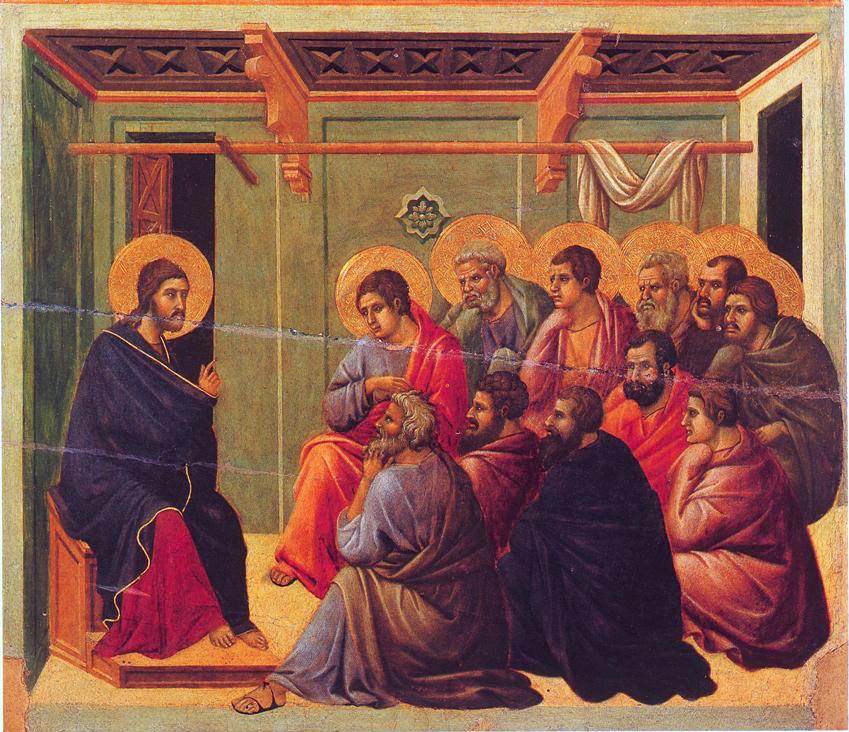
Our Lord Jesus Christ before He suffers, before He is betrayed, before He willingly gives up his life and endures the cross for our salvation teaches His disciples about what is to come. He warns them that great persecutions will come for them, that the world will hate them because of Him and even their own Synagogues will cast them out. The fate of the followers of Jesus recorded in the Acts of the Apostles shows the truth of this prophecy, and indeed your mighty Patron St Paul in the end was executed by the Romans. I wonder how many of those disciples knew what kind of life they were signing up for when the Lord passed them by at their tax booths and their feasting, at their nets at in the fields? He said “follow” and they left their past to join Him, not knowing where it was that He would take them. Perhaps they were tired of the life they had lived. Maybe they had friends who had told them about this strange life they had began with Jesus and they wanted to see for themselves. Or was it something in His voice, something in His eyes, the way He touched them? I wonder when they knew their association with the Nazarene had made them enemies.
The Lord Jesus before His passion explains all that is to come. He can do so because he is a Prophet, and more than a Prophet. Prophecy as we hear in the Bible is not the mere telling forth of the future, it is also the meaning of that future rooted in the promises of God. Not only what will be but what must be. Jesus Christ goes bravely on to His suffering because He knows He does the will of His father and rejoicing because by His suffering He will liberate His disciples from the chains of death and sin. The cost for Him is the dear price of His own life, but there is a cost for us too. Enmity with a world that loves the darkness more than the light and sin more than righteousness. In this time before He suffers He tells them the Truth. He has called together a fellowship of the outcast, the downtrodden, the forgotten, and the useless and made them the first partakers of the everlasting life for which humanity was always destined. Eternal life is life in God, in union with Him to delight in His presence and behold His Face. Jesus when He is with His disciples shows them what this is like, it is like an abundance of fine wine to fit a wedding, like new hope when one we love is restored to health, plenty of food after a wearying journey, and the undoing of all that ought not be. That Jesus can show us this life is evidence of His sinless perfection which enables Him as Man to be filled with the Holy Spirit which is God, the Third Person of the Holy Trinity.
Jesus prophecies not only His death, and not only the danger to come for those who are called by His name, but also His ascension into Heaven. In the Gospel read today He explains why this is. He must ascend so that we may receive the Comforter, the Holy Spirit. When our Lord was baptised the Spirit descended on Him in the form of a dove, and the voice of God declared “this is my Son, listen to Him”. The Holy Spirit, the Third Person of the Blessed Trinity, rightfully fills the Son of God. From eternity the Father and the Son and the Spirit enjoy an intimacy beyond any friendship or love that we could perceive or imagine. In the perfection and beauty of each Person the Others of the Trinity rejoice and fully share Themselves. That Jesus in His incarnation is so united to God in the Holy Spirit is simply a witness to that Triune relationship in God beyond all time and place. The Holy Spirit we might call Jesus’ inheritance, appropriate to the Son of the Father because all that the Father has is given to the Son and appropriate to Son of Man on account of His actual perfection and lived holiness. We disciples of Jesus Christ are not so entitled to that intimacy with God such that God would fill up our failing flesh. But Jesus Christ has gone before us in suffering and gone before us in rising to ascend to the right hand of God, assuming the Throne and taking all power and dominion. He goes into His inheritance, receiving from the Father the fullness which is the Holy Spirit. Given to the Son this fullness of God is the Son’s gift to give. Before He suffers He has told the Disciples that He will send them the Comforter. He knows full well that this is not a blessing we can earn or a status we can achieve. It is handed to the Son and it is the Son’s delight to give it to His Friends.
It is better for us that Jesus goes, for He goes to claim His prize and to share the spoil of His great campaign with us who belong to Him, whom He has won by His death and called by His Word.
In our usual experience when we receive a gift or inheritance it is a set amount or a finite asset. A treasure to be carefully guarded lest it be pilfered away. When we are taught by our parents or professor or coach what we receive lives on in us as hopefully an echo and memory, but always prone to forgetfulness. Like summers of thick humidity and too-hot sand between the toes, the distance of time makes these fade until what is remembered is who was there who now isn’t or the scar that recalls a youthful stumbling over a rock-pool, so we continue year after year trying to regain that which was lost only to realise that each revisiting is never fully like the old. Change and the decay of our finitude means that what was is what was, a handrail just past gasping. But our ancestors in the Church did not experience their Salvation in this way. St James tells his sisters and brothers that “every good gift and every perfect gift is from above” but not like the sunshine above which glowed in summer and is pale in winter, but rather “with whom there is no variableness, neither shadow of turning.”
The Gift given is not subject to the decay to which all other human gifts are subject. It is a perfect Gift because it is God’s gift of God Himself given by God Himself. No distance of time can tarnish it. We today are made new by the same Holy Spirit that made the first Disciples new. We are the first fruits as they were. This is the goodness of Our Saviour who has made available to us the eternal inheritance of everlasting life, and that life is the life of God known in Jesus Christ. The only harm that can come to this life is sin, and sin is always simply a rejection of Jesus Christ. Sin is when we put up our hands to block the brightness of the face of God from shining upon us as if the glory is too much or the sight too beautiful. Or else that we have stopped desiring the truth and would prefer something else. St James would tell us that the power to reject the life of God remains with us, and even then we may do so with the best of intentions. If we have reason to be impatient that the good rule and reign of God is not yet fully realised they surely have more, who in that time were slaughtered by Emperors and scorned by temples. But he tells the infant church this grasping in anger will not bring about God’s good promises.
No. Put your hands down and look up. As our Lord did not raise his hands to fight in the time of His Passion we too wait patiently for the unfolding of God’s promises. Our sin can cast a shadow that deprives us of the Spirit whom Jesus wills for us to receive. The remedy for this is not in trying harder nor in fixing it ourselves. It is in meekness. And so let us with meekness kneel down at this altar and receive from the Lord all that He has to give us, even His very self.


